|
|
|
|
|
 Akbar's Mausoleum
|
| |
| Mausoleum
|
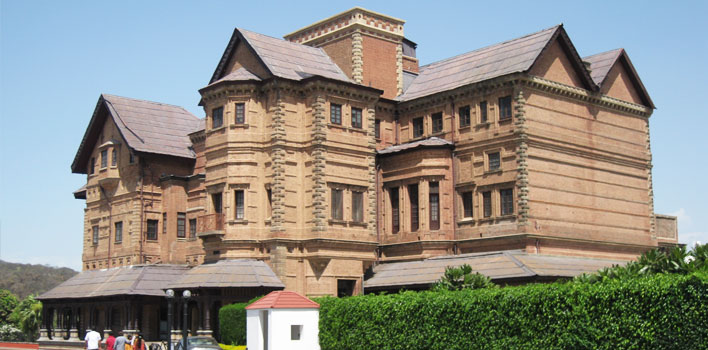
A broad paved causeway leads to the tomb having five storeys that is in the shape of a truncated pyramid. The main tomb has a unique square design which is unparalleled by all other Mughal buildings.
The ground floor has spacious cloisters on all the four sides except in the middle of the southern side. Numerous bays divide the cloisters by massive piers and arches. Each bay measures 22 feet square. A vestibule, which has been profusely ornamented with exquisite carvings, occupies the centre of the southern side. The tombstone of Emperor Akbar is placed in the middle of this room. His daughters, Shakrul Nisha Begum and Aram Bano are also entombed in this floor.
The second storey has an arcaded verandah on each side, which is composed of 23 bays. Here the use of an ornamental arch and square pillar has brought about a unique composition.
These storeys are smaller in size and they have an identical arrangement of arches supported on pillars and chhatris attached on the exterior to each facade.
The fifth storey is built entirely in white marble.
|
| Location
|
10 kms. from Agra
|
| About Akbar's Mausoleum
|
Situated about 10 kms. from Agra, in the small town of Sikandra, this mausoleum is a fusion of Muslim Hindu architectural style. It was started by Akbar but completed by his son Jehangir in 1605.
|
| Construction
|
The mausoleum is situated in the centre of a large garden and four red sandstone gates lead to the tomb complex-one is Muslim, one Hindu, one Christian and the other is Akbar's own patent the Din Ilahi, a mixture of all religions.
The complex consists of two buildings, one the mausoleum and the other a gigantic gate, connected to each other via a wide paved walkway.
The Buland Darwaza (gateway of magnificence) consists of a huge archway and 4 marble minarets, which is more impressive than the mausoleum.
The architecture of the mausoleum is interesting as it is a good example of the mixture of the use of sandstone together with marble. It reflects the fusion of Hindu and Muslim art and architecture which characterized the era. Inside the mausoleum, one can find the cenotaph in a very small sober room. In the gardens of the tomb is the Baradi Palace, which was built by Sikander Lodi who ruled here just, preceding the Moghul period.
|
|