India >> North Zone >> Uttar Pradesh >> Agra


|
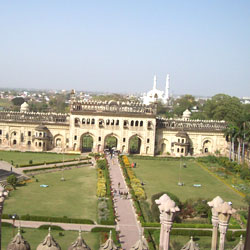
Dayalbagh Gardens
Introduction :
Agra is one of the most important cities of India from the point of view of tourism. The city has a number of varied attractions that are guaranteed to please people of varied tastes. Thus, where history is represented by places like the Taj Mahal, Agra Fort and Fatehpur Sikri, sceneries and the beauty of nature is celebrated by the presence of gardens like the Rambagh Gardens and the Dayalbagh Gardens.

Foundation
The Dayalbagh Gardens have been founded in the memory of Shiv Dayal Sahib the founder of the Radhasoami Satsang Movement, a religious movement that was begun in 1861. The movement basically follows a code that is an amalgamation of a number of other religions such as Hinduism, Christianity, Sikhism and Buddhism.
Architecture :
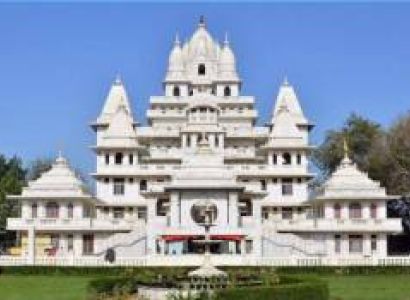
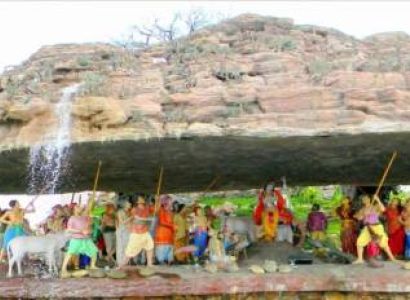
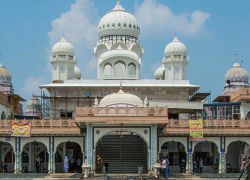
The architecture of the Dayalbagh Gardens follows much of the same pattern of amalgamation of the traits of different religions like the Radhasoami Satsang movement itself. Thus, this beautiful memorial gives examples of different architectural styles such as those that can be found in temples, gurudwaras, viharas and mosques all across the country. Impressive at a height of around 110 feet, the memorial is built completely in white marble with majestic pillars.
An interesting feature of the memorial is that the construction work at the site is a continuous process. This is due to a belief of the followers of the faith which insists that tending the memorial should be a constant process..
|


|
Mehtab Bagh Agra
Introduction to Mehtab Bagh, Agra :
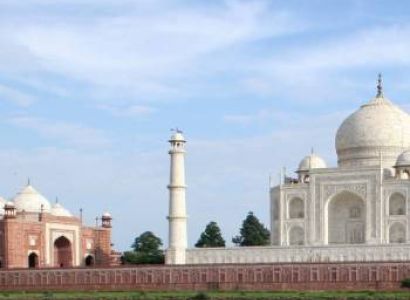
The Mehtab Bagh in Agra is laid out in just right symmetry and alignment with the Taj Mahal and it was intentionally built as an integral part of the original design of the Taj Mahal during the period from 1631 to 1635 A.D. It has been named as the ‘Mehtab Bagh’ or ‘The Moon Garden’ because it is an ideal point for viewing the Taj Mahal in romantic moonlight.
History of Mehtab Bagh, Agra :
When the world famous Taj Mahal was being constructed 350 years ago a moonlight garden named Mehtab Bagh was laid just across the Yamuna River. It was laid alongside the northern waterfront. The place was once an oasis with sweet-smelling flowers, shaded pavilions, fountain jets and reflecting pools but it ceased to exist in the due course of history. Gradually the site became barren and lost its earlier charm. Once you visit the Mehtab Bagh in Agra you will get transformed into the glorious Mughal era. This is one of the most famous gardens in Agra.
Description of Mehtab Bagh, Agra :
Agra Mehtab Bagh is a 25-acre plot has now transformed into an epicenter for the top court-ordered project to set up protective greenways around the Taj. As the land is reclaimed, historians and geographers from around the world are trying to learn about the wonderful garden that once existed near this oasis. An advance technology inspired from Iran has been applied to bloom the Mehtab Bagh once again. Mehtab Bagh in Agra will again flower with fragrant and colorful flowers which will surely produce the sweet smell of the glorious past.
The growing attention to Agra Mehtab Bagh can be credited to the escalating concern for the Taj and its grounds, which are in danger by urban sprawl, too many tourists, and air pollution that eats away into the shrine's marble exterior. The lush gardens that once lined the riverbanks on either side of the Taj may flourish again in a scheme to protect it from further damages. Conservationists uphold that a buffer zone of greenery would keep development at bay and help remedy local air, noise, and water pollution. Much of the land for the greenbelt had already been acquired through a previous proposal to establish a 340-acre national park around the Taj. While yours to Agra a visit to this opulent garden will mark you treat your eyes far away from the hustle bustle of the busy town..
|


|
Ram Bagh
The earliest example of a Mughal garden, was created by the founder of the dynasty, Emperor Babur..
|


|
Shah Jahan Park
Introduction to Shah Jahan Park, Agra :
A hop to Agra is not only an exciting experience of life but its very enriching and pleasant experience too to cherish for entire life. Here you will come across the most enduring symbols of love, the Taj Mahal which also enjoys a place of pride among the Seven Wonders of the World. The beauty of the Agra Fort can not also be missed. However if these are the places to bask in the architectural glory of the bygone days and learn about their historical connections then there are several gardens in Agra to simply seek some relaxed and pleasurable moments of life. And one such garden that stands out from the rest because of its picturesque beauty and enchanting ambience is Shah Jahan Park in Agra.
Agra Shah Jahan Park is a beautiful Mughal garden with lush green expanse. It stretches towards Taj Mahal on west direction.
Description of Shah Jahan Park, Agra :
Agra Shah Jahan Park is counted among the very attractive Mughal gardens in India. Its lush green expanse and emerald colored floors create an indelible impression on the minds of the onlookers who visit this site to enjoy a great time. The beautifully laid out green stretch of the garden is an ideal place to relax and catch fresh breath. This park offers an enjoyable break to indulge in leisurely stroll on way to Taj Mahal. It is very adjacent to Motilal Nehru Park too that again offers easy access to Taj Mahal. Besides there is an extensive Golf Course which is a very popular destination for the tourists.
The Shah Jahan Park in Agra is a perfect place for those who want to get engrossed in the pristine air of Agra and are intrigued by the rich history of the town. This garden is mostly visited early in the morning or little late in the evening by joggers and pleasure seekers.
.
|


|
Taj Mahal Garden
Introduction to Taj Mahal Garden, Agra :
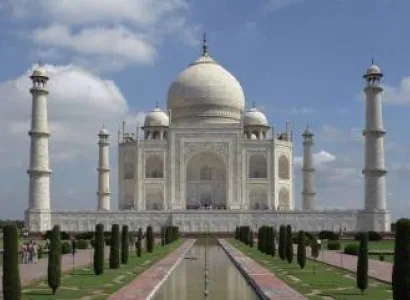
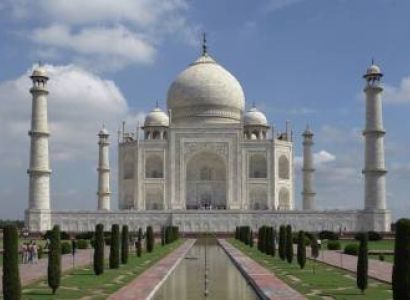
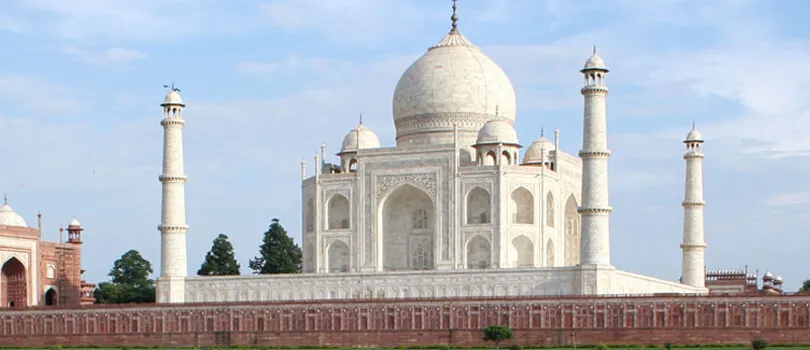
Taj Mahal is the most important monument in Agra which is the symbol of eternal love. It features among the Seven Wonders of the World. Taj Mahal incorporates both Persian and Hindu elements; therefore Taj Mahal flaunts a Persian style garden. Garden in Persian culture is a very important motif as Quran equates a gorgeous garden with ecstasy. Stretched from the main gateway to the doorway of this mausoleum, the lush green Taj Mahal garden in Agra is based on symmetry and geometrical measurements.
Description of Taj Mahal Garden, Agra :
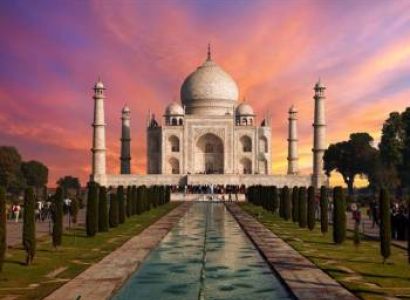
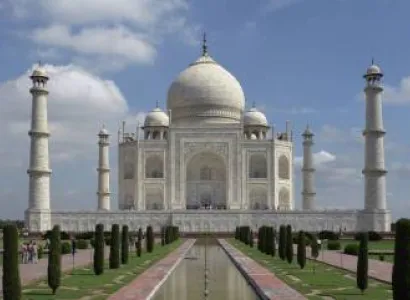
Taj Mahal gardens, Agra mostly feature religious motifs. The Water Garden, for example, is divided into four equal squares by two marble canals. The garden is bounded by cypress trees and fountains; the garden conjures up the Islamic concept of heaven where rivers of water, milk, wine and honey flow. At the center of the garden and the mausoleum a lotus shaped tank is located. The water in the tank acts as a reflective facade and the image of Taj can be seen on the water from any spot in the garden. The exclusive location of the tank helps the mirror like viewing of this extravagant monument of love.
The Taj Mahal Garden in Agra features a Persian style garden which symbolizes heaven, since Quran describes paradise as a beautiful garden. On the other hand the water garden of the Agra Taj Mahal garden feature two marble canals with fountains and lined with cypress trees (symbolizing death).
This divides the garden into four identical squares (Islam recognizes four to be a holy number), the stone paved pathways again subdivides each flower bed into 4, making total of 16 flower beds.
The tank has been arranged to provide a crystal clear view of Taj in its water. The view looks wonderful with the reflection of Taj amidst the green cypress trees.
Taj Mahal Garden in Agra displays a unique irrigation system. Water in the canals was drawn from the river using purs, a system of drawing water physically from river using bucket and ropes. For irrigation the water from the overflowing canals was used. The north-south canals had its water bay through fountains and east-west canal had its water bay through a intermingling with north-south canal. It has been made very uniquely which still astonishes the tourists who come here to view the eternal monument of love.
.
|


|


Related Cities

|